
Introduction
In today’s fast-moving U.S. market, when a consumer company divests a business unit, it sends a strong signal. It shows leadership wants clarity, focus, and better growth. Many readers ask about the meaning of a consumer company divests business unit, especially as headlines around mergers and sales increase. In simple terms, a company chooses to sell or separate one part of its operations to strengthen the whole business. This decision often connects directly to profit pressure, competition, or changing consumer habits.
At its core, this move reflects what divestiture in business management is and how modern companies adapt. Executives no longer try to do everything. Instead, they trim weaker units and double down on what works. This approach supports corporate restructuring through divestiture and often improves long-term performance in the U.S. consumer sector.
What Does It Mean When a Consumer Company Divests a Business Unit
When people ask about the meaning of business divestment in simple words, the answer is straightforward. A company sells, spins off, or closes a business unit that no longer fits its goals. The Business Unit Divestiture Process Explained Simply involves valuation, buyer search, legal approvals, and final transfer. This is not failure. It is strategic adjustment.
In many cases, how divestiture works in consumer companies depends on size and market position. Large U.S. brands often sell units to private equity firms or competitors. Smaller firms may exit entirely. Either way, selling a business unit by a company helps leadership regain control and direction.
Divestiture Meaning in Business and Real-World Context
Think of divestiture like cleaning out a crowded closet. You keep what fits and remove what doesn’t. That analogy explains hy a consumer company divests a business unit in practical terms. It reduces waste, cost, and distraction. The divestiture past tense and verb usage also matter in reporting, since companies announce they “divested” assets to signal progress.
Why a Consumer Company Divests a Business Unit
The reasons behind business unit divestiture in consumer companies usually start with performance. Some units drain cash, while others no longer align with a company’s brand identity or long-term goals. Leaders evaluate financial data, market trends, customer behavior, and competition before making a decision. This careful review forms an important part of the divestiture decision-making process. As companies increasingly use digital tools to track performance and improve operations, platforms such as SoftwareCora offer practical insights across business software, productivity tools, CRM platforms, and other technologies shaping modern business decisions. Businesses and industry professionals interested in sharing relevant software and technology insights can also learn more through SoftwareCora’s Write for Us page.
Another driver is growth focus. A consumer company divests a business unit for a growth strategy when capital and management attention can generate better returns elsewhere. Digital expansion, sustainability initiatives, premium products, and new market opportunities may offer stronger returns than maintaining a slower or underperforming division. This shift highlights the strategic reasons consumer companies sell business units in the U.S. market.
In some cases, the decision is also driven by changing consumer behavior, increased competition, or the need to simplify a complex business structure. When a unit no longer supports the company’s core strategy, selling or separating it can allow leadership to redirect resources toward products and markets with greater potential. This makes divestiture less about simply selling an asset and more about creating a focused, efficient, and sustainable business for the future.
Common Triggers Behind Business Unit Divestiture Decisions
Regulation, shareholder pressure, and market slowdown often trigger action. In many non-core business divestment examples, companies exit unrelated sectors to protect margins. Timing matters, because leaders must judge when a consumer company should divest a business unit for maximum value.
Strategic Benefits of Divesting a Business Unit for Consumer Companies
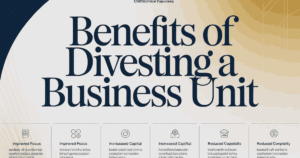
One major benefit is cash. The financial benefits of divesting a business unit include debt reduction and reinvestment. This improves flexibility and stability. Many analysts point to how companies benefit from divestiture through stronger balance sheets and leaner operations.
Another advantage is clarity. Teams work better when goals feel simple. The advantages of business unit divestiture for companies include faster decisions, better branding, and improved customer focus. Over time, this supports the long term impact of divestiture on company performance.
How Divestiture Supports Long-Term Corporate Strategy
In the U.S., divestment often supports innovation. Companies reinvest proceeds into technology and logistics. This reinforces asset sale strategy in consumer companies that aim to stay competitive in crowded markets.
Risks and Challenges When a Consumer Company Divests a Business Unit
Divestiture is not risk-free. Execution errors can reduce value. Employees may feel uncertain. The impact when a consumer company divests a business unit sometimes includes short-term disruption and confusion.
There is also brand risk. Poor communication hurts trust. Leaders must explain the difference between divestiture and spin-off clearly, since confusion can weaken credibility. Legal complexity also increases costs through a divestiture agreement in corporate business.
Hidden Challenges Companies Face During Divestment
Separation costs add up quickly. IT systems, contracts, and staff must split cleanly. These challenges shape the business unit sale impact on market value in early trading periods.
Examples of Consumer Company Divests Business Unit in Recent Years
Several examples of divestitures in the consumer industry show this strategy in action. Major U.S. brands have sold food, beauty, and household divisions to refocus on higher-growth segments. These moves often boost investor confidence.
In many Consumer company divests non core business unit cases, the buyer gains scale while the seller gains focus. Analysts closely watch results to measure success and failure across sectors.
Recent U.S. Consumer Brand Divestiture Examples
A well-known food company sold a snack division to strengthen its core brand. Another retailer exited private labels to focus on digital sales. These cases highlight selling a business unit by a company as a practical reset.
Impact on Shareholders When a Consumer Company Divests a Business Unit
Investors care deeply about the effect of divestiture on consumer company shareholders. In the short term, stock prices may swing. Over time, strong execution often rewards patience.
Data shows the business unit sale impact on market value improves when companies clearly explain strategy. Transparency builds trust and reduces uncertainty for U.S. investors.
Short-Term Market Reaction vs Long-Term Shareholder Value
Short-term traders react emotionally. Long-term investors focus on fundamentals. That contrast explains why divestiture outcomes vary across quarters.
How Divestment Helps Consumer Companies Focus on Core Business
Focus is power. When a consumer company divests business unit to focus on core operations, leadership simplifies priorities. Teams align around fewer goals and execute better.
This clarity supports brand strength and customer loyalty. Many leaders credit divestment for renewed momentum and faster growth.
Refocusing on Core Strengths After a Business Unit Sale
After separation, companies realign strategy and culture. This reinforces consumer companies’ divestment strategy for growth across competitive U.S. markets.
Future Trends: Why More Consumer Company Divests Business Units
Economic pressure and rapid change drive future divestments. Analysts expect more spin-offs vs divestiture in consumer companies as leaders debate the best path forward.
Technology, ESG goals, and activist investors accelerate decisions. These forces explain why divestiture will remain central to U.S. corporate strategy.
What the Future Holds for Consumer Company Divestitures
As markets evolve, divestment becomes normal. Companies that act early often win long-term trust and performance.
Table: Divestiture vs Spin-Off in U.S. Consumer Companies
| Factor | Divestiture | Spin-Off |
|---|---|---|
| Ownership | Sold to buyer | New public company |
| Cash inflow | Yes | No immediate cash |
| Control | Fully transferred | Shared initially |
| Common use | Exit non-core units | Unlock hidden value |
Faq’s
What is divesting a business unit?
Divesting a business unit means a company sells or separates one part of its operations to focus on stronger areas. It helps improve efficiency, cash flow, and long-term strategy.
What is a divest strategy in business?
A divest strategy is a planned approach where a company exits non-core or underperforming assets. This strategy supports growth by freeing capital and management focus.
What is meant by divestment in business?
Divestment in business refers to reducing ownership by selling assets or divisions. Companies use it to realign goals and improve overall performance.
What does it mean when a company divests something?
When a company divests something, it transfers ownership to another party. This move often strengthens the company’s financial position and strategic focus.
